
WinGo on Jojo 66: How Colour Prediction Games Work
WinGo is one of the most played games on Jojo 66, and it is easy to see why. The rules are simple, each round lasts only a short time, and the result is shown quickly. This guide explains how WinGo works, what the colours and numbers mean, and how new players can approach it calmly. If you have never tried a colour prediction game before, this is a good place to start, because everything about WinGo is designed to be understood in a few minutes rather than a few hours.
What Is WinGo?
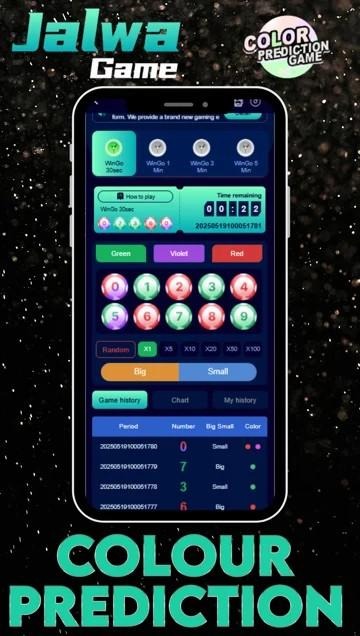
WinGo is a lottery-style game built around predicting the outcome of a short round. In each round, a result is drawn, and players who predicted that result correctly win that round. The game runs in cycles, so a new round begins soon after the last one ends, and players can join the next round whenever they are ready. There is no long waiting time and no complicated setup. The screen shows a timer counting down to the next result, the recent results from earlier rounds, and the choices available for the round that is coming up. This clear layout is part of the reason new players find WinGo easy to follow from the very first round.
Colours and Numbers Explained
At the centre of WinGo are colours and numbers. Each round produces a number, and that number is linked to a colour, so players can choose to predict a colour, a number, or both depending on the options shown. Red, green, and violet are the colours most players will see, and each one is tied to a set of numbers. Some choices cover more numbers than others, which changes how often they appear. The game screen shows the recent history of colours and numbers, so players can see what has come up in the rounds before. Reading this history is useful for understanding the game, but it does not tell you what will happen next, because every round is a fresh draw.
How a Round Works
A WinGo round follows the same pattern every time. First, the timer starts counting down, and players have a short window to make their choice. During this window you select the colour or number you want to predict and confirm your choice. When the timer reaches zero, the round closes and the result is drawn and shown on the screen. If your prediction matches the result, the round is a win for you; if not, the round ends and you can wait for the next one. The whole cycle takes very little time, which is why players often watch several rounds in a row. It helps to play the first few rounds slowly so the rhythm feels natural.
Different Time Options
WinGo is often offered in more than one time setting, so players can pick a pace that suits them. Shorter rounds move quickly and give fast results, while longer rounds leave more time to think before choosing. New players usually find the longer setting more comfortable, because it removes the pressure of deciding in a hurry. The rules stay the same whichever setting you choose; only the length of the round changes. If you are unsure, start with the slower option and move to a faster one only when you feel confident about how the game works. There is no advantage in rushing, and a calm choice is always better than a hurried one.
Playing WinGo Sensibly
WinGo is a game of chance, so no prediction method can guarantee a result. The sensible way to play is to treat it as entertainment, decide on a small limit before you start, and stop when you reach it. Avoid chasing a loss by playing round after round, because the fast pace makes it easy to keep going without noticing how much time has passed. Take breaks between sessions, and never play with money you need for everyday expenses. Watching a few rounds without playing can also help you learn the flow. Enjoyed slowly and within a limit, WinGo on the jojo 66 game platform is a simple, quick game that many new players enjoy.
WinGo is simple at its core: predict a colour or a number, wait for the short round to end, and see the result. Learn the colours, start with a slower pace, and play within a limit you set for yourself.
