Relegation‑Battle Styles in La Liga 2016/2017 and Their Link to Low Scores and Yellow Cards
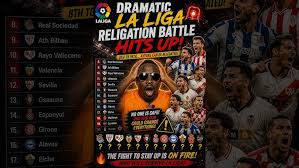
The 2016/2017 La Liga season ended with Sporting Gijón, Osasuna and Granada relegated, but several other clubs hovered near the drop for long stretches. Those sides often played in tight, nervous matches where survival mattered more than spectacle, and that priority shaped not only how many goals were scored but also how frequently yellow cards appeared as duels grew desperate. Looking at how “relegation teams” approached games reveals why some fixtures naturally dragged toward low scores and heavy discipline, and why others broke that pattern.
Which teams were in the relegation fight and what that implies
Any analysis of style has to start with who actually fought at the bottom. In 2016/2017, the final table shows Sporting Gijón, Osasuna and Granada in the bottom three, with other clubs such as Leganés and Deportivo La Coruña spending parts of the season close to the relegation threshold. The cause of their predicament varied—limited attacking quality, porous defending, or inconsistent performances—but the shared outcome was pressure: every point mattered, especially in matches against fellow strugglers.
That pressure tends to influence match profiles. Teams trying to avoid the drop often become more conservative, tighten their defensive block and prioritise not conceding over expansive attacking play, particularly away from home. The impact for totals and cards is twofold: fewer risks taken with numbers committed forward can depress goal counts, while the intensity of duels in midfield and defence—especially late in the season—can raise the probability of tactical fouls and yellow cards as players fight to protect narrow leads or vital draws.
Why relegation‑zone matches often lean toward lower scores
From a structural perspective, survival battles create incentives for risk‑averse tactics. Analysis of team strategies in relegation contexts highlights that coaches frequently adopt deeper defensive lines, more compact shapes and simpler attacking patterns, because a single mistake carries outsized consequences. In 2016/2017, bottom‑placed La Liga sides often struggled to score freely, with relegated clubs posting some of the lowest goals‑for totals in the league.
This combination—weak finishing and conservative setups—naturally pulls many games toward lower scorelines. When both teams share the same priority, especially in six‑pointers between relegation rivals, the first half can become cagey: long balls, second‑ball battles, few players breaking lines. The outcome is that 0‑0 and 1‑0 scorelines become common logical endpoints for these match scripts. The impact for goal‑line bettors is that “bad team” does not automatically mean “chaotic overs”; often it means low scoring because neither side can or will open the game unless forced.
Comparing tendencies across different relegation‑battle styles
Not all struggling teams approach danger the same way. Even within the 2016/2017 relegation fight, styles varied: some sides tried to stay up by defending deep and grinding out results, while others were more transitional and open, hoping to outscore opponents despite defensive weaknesses. Differentiating these approaches is crucial when thinking about under bets and card lines.
A deep‑block, low‑possession style tends to reduce shot volume overall but increases the proportion of defensive actions in the final third—blocks, tackles, emergency clearances—which can raise card risk even as it suppresses goals. A more open, counter‑attacking style might create more shots and transitions, lifting the chance of both teams scoring, but sometimes reducing the constant, compact defensive duels that drive yellow cards unless pressing is intense. The impact is that “relegation team” is too broad a category; for accurate betting decisions, you need to recognise which of these stylistic clusters each club falls into.
How UFABET can sit inside a style‑based approach to cards and totals
Once you identify these stylistic patterns, you still need to translate them into practical choices on markets like under goals or team‑card lines. In that step, many bettors prefer to work through one main account where they can see a wide selection of totals, card markets and alternative lines for each La Liga fixture, and for some users this central hub is a sports betting service such as ufabet168 เข้าสู่ระบบ. From a reasoning standpoint, the key is sequence: you begin with an assessment of style and match context—two compact relegation candidates, one open and one cautious, or a desperate chaser versus a more secure opponent—and only then look at what goal and card options the service offers. The cause is that tactical understanding anchors your selection of under/over and booking markets instead of the menu of prices leading the way; the outcome is fewer impulsive bets on low‑value lines just because a number looks attractive. Across many relegation‑battle fixtures, the impact is a portfolio of bets that more closely mirrors the actual way those teams play under pressure.
Yellow cards: why relegation pressure raises disciplinary risk
Relegation matches are not only about goals but also about discipline. Studies of football psychology and observational analysis both note that stress, high stakes and defensive game plans tend to increase the number of fouls, especially in midfield and around the penalty area. In La Liga, separate seasons’ disciplinary tables show that teams constantly involved in survival fights often rank near the top for yellow cards, reflecting the frequency of tactical fouling, time‑wasting and physical duels.
The mechanism is straightforward. When a draw is valuable and goals are scarce, players have strong incentives to stop counters at source, even at the cost of a booking, and to contest every aerial duel and second ball aggressively. Referees, aware of the stakes and the rising temperature of the match, may respond with more cards to maintain control. The impact for betting is that while relegation games may be good candidates for under‑goals lines, they can simultaneously be attractive for over‑cards lines, particularly when the referee’s own historical tendency to book players is high.
H3: Conditional scenarios where low goals meet high cards
There are clear conditions under which low‑scoring but card‑heavy matches are most likely. One common scenario is a late‑season six‑pointer where both teams are in or near the bottom three and a draw keeps them alive while a loss is disastrous. In that situation, the first priority for both managers is usually not to concede early, leading to conservative shapes and compressed central zones.
As time passes, every duel gains importance: defending players cannot afford to let opponents run free, and attackers know that winning free kicks in dangerous areas is one of their best scoring avenues. The cause is that the game state and table context compress risk into fewer but more intense actions. The outcome is that the scoreboard often stays low—0‑0, 1‑0, or 1‑1—while yellow‑card counts rise steadily through accumulated fouls and dissent. The impact is that the same match that looks poor for over‑3.5 goals can still be excellent for over‑bookings if the tactical and emotional conditions line up.
Using comparative tables to structure expectations
One way to bring structure to this analysis is to think in terms of profiles rather than raw labels. While detailed 2016/2017 yellow‑card tables are harder to surface directly, general La Liga discipline data from other seasons show how team styles correlate with card counts, and similar logic can be applied retroactively to relegation teams. You can build a mental table that cross‑classifies low‑block versus open styles and disciplined versus aggressive teams, then map likely goal and card outcomes onto each cell.
For example:
- Compact + aggressive: more likely under on goals, over on cards.
- Compact + disciplined: under on goals, moderate card risk.
- Open + aggressive: higher variance on both goals and cards.
- Open + disciplined: overs possible, but card lines more moderate.
This sort of conceptual table matters because it separates cause from effect. Instead of assuming “relegation match equals bloodbath” or “equals boring 0‑0,” you evaluate which style/temperament combination is actually present. The outcome is a more nuanced expectation of both scoreline distribution and disciplinary patterns; the impact is that your betting decisions can target the specific combination you see rather than a generic relegation narrative.
Where the low‑score, high‑card logic can fail
The pattern of low goals and high cards in survival battles is strong enough to be useful, but it is not universal. Sometimes a relegation‑threatened team abandons caution and plays aggressively because draws are no longer enough; in those cases, line‑ups and tactics can shift to include more attackers and higher pressing, opening matches up. Under these conditions, you may see more goals and still a lot of cards, especially if defensive structure has been sacrificed for extra forwards.
Another failure mode occurs when a stronger mid‑table or top‑half opponent scores early and forces the struggling team to chase. The cause is that game state flips the incentives: the underdog must risk more to equalise, leading to a more stretched game with transitions both ways. The outcome can be scorelines that break under‑goal expectations—2‑1, 3‑1, or worse—while card patterns depend heavily on how the chasing side responds emotionally. The impact is that pre‑match expectations about low scoring and many bookings must always be moderated by watching line‑ups, formations and, in live betting, the actual flow of the game rather than treating relegation status as destiny.
Keeping relegation‑match edges separate from casino online variance
From a practical betting angle, even a solid understanding of relegation‑battle styles only becomes an edge if your bankroll and behaviour allow that edge to express itself over many matches. Responsible‑gambling and bankroll‑management guides repeatedly stress that mixing structured football bets with unrelated high‑variance games makes it hard to tell whether a strategy is genuinely working. When someone uses the same account or wallet both for carefully chosen under‑goals and card lines in La Liga and for quick, entertainment‑driven play in a casino online environment, the swings from the latter can swamp the measured gains or losses from the former.
The cause is that emotional states produced in one setting—frustration, overconfidence, boredom—easily bleed into stake decisions in the other, leading to inconsistent bet sizing and blurred financial results. The outcome is that even correct reads on relegation matches can disappear into overall noise, making it impossible to refine the style‑based approach or to trust its long‑run expectations. The impact of keeping these activities financially and mentally separate is that you can see clearly whether your reading of low‑scoring, card‑heavy scenarios among 2016/2017’s relegation teams actually adds value or merely feels insightful without changing your bottom line.
Summary
Comparing the styles of La Liga’s 2016/2017 relegation‑zone teams shows why many survival matches gravitated toward low scoring but intense, card‑heavy football: conservative tactics and limited attacking quality suppressed goals, while pressure and compact defending increased fouls and bookings. The relationship is strongest in late‑season six‑pointers between similarly cautious sides, and weaker when desperation forces teams to attack or when stronger opponents quickly alter game state. For bettors, the practical edge comes from distinguishing between different relegation styles and aligning under‑goal and card markets with those profiles, while keeping that focused analysis insulated from unrelated gambling volatility so its true effectiveness can be measured over time.